Cotton Lavender · Santolina chamaecyparissus
A field note on Cotton Lavender
The Botanical Profile
Botanical Name: Santolina chamaecyparissus (commonly known as Cotton Lavender or Lavender Cotton).
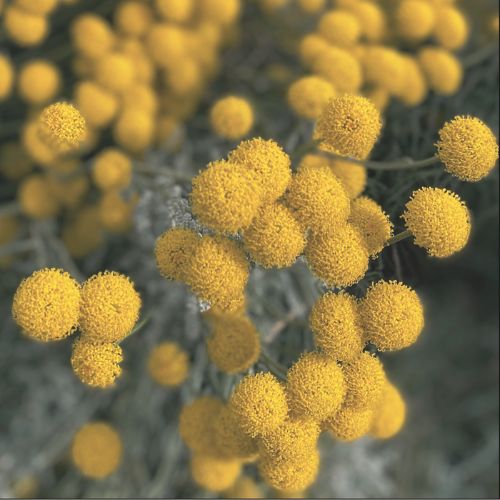
The Seasonal Habit: A hardy, evergreen Mediterranean sub-shrub that thrives in dry, sun-baked conditions. It is deeply resilient, carrying a silver-grey presence through the winter months before waking up to produce bright, button-like yellow flowers in mid-summer.
The Visual Presence: A dense mound of finely divided, woolly silver-grey foliage that feels almost like coral to the touch. In late summer and autumn, the bright yellow blooms transition into the whimsical, structural, papery seed plumes seen dancing in the breeze.
The Behaviour in the Field
Cotton lavender is a beautiful lesson in textural endurance. While many plants rely on brilliant, fleeting petals to make their mark, this shrub commands attention through its form and foliage long after the summer color fades. It holds its structural integrity against heavy coastal winds and frosty mornings, its silver leaves reflecting the light when the rest of the garden turns bare. It doesn’t drop its spent blooms in a rush; instead, it lets them dry into delicate, feathery pom-poms that catch the air. It is a reminder that there is profound value in what we hold onto and how we weather the quieter, drier seasons of our lives.
Cultivation & Care
The Light Required: True to its Mediterranean origins, Santolina demands a position of absolute openness to the sun. It requires full, baking light to maintain its tight, silver form. Placed in the shade, its stems will stretch, weaken, and lose that distinct, dense woolly texture.
The Earth Beneath: This plant actively thrives in poor, lean, and gravelly soils where other plants might struggle. It possesses an absolute requirement for sharp drainage. Heavy, wet clay is its only true enemy; it prefers sandy or rocky ground that dries out almost instantly after a rain.
The Act of Planting: Plant out in autumn or early spring to let the roots establish before the baking summer heat arrives. Give it space to spill over borders or retaining walls naturally. To keep it from becoming woody and splitting in the center, give it a firm prune back in late summer once the button flowers have finished.
Water & Restraint: Once its roots are anchored, cotton lavender is exceptionally drought-tolerant. It requires a strict boundary with the watering can. Overwatering will cause the root system to suffer; step back and let the earth dry out completely, trusting its natural capacity to thrive on neglect.
Bringing Beauty into the Everyday
In the Garden: Use it as a structural, silvery border against dark green foliage or along gravel paths. It provides a striking, year-round contrast and acts as a dependable anchor that catches the low winter light beautifully.
In the Daily Ritual: The foliage carries a sharp, clean, herbal fragrance that naturally repels pests. Snip a few of the dried, feathery seed plumes or silver stems and place them in a small bunch on your workspace desk or inside a wardrobe. Let its clean, defensive scent be a reminder to set clear boundaries in your environment, protecting your focus and keeping the clutter of the outside world at bay.