White Poppy · Papaver alba
A field note on the White Poppy
The Botanical Profile
Botanical Name: Papaver alba
The Seasonal Habit: A sun-seeking annual or short-lived perennial that favours open, well-drained ground. It arrives with ephemeral grace—each bloom a brief gift, lasting only a day or two before releasing its petals to the wind.
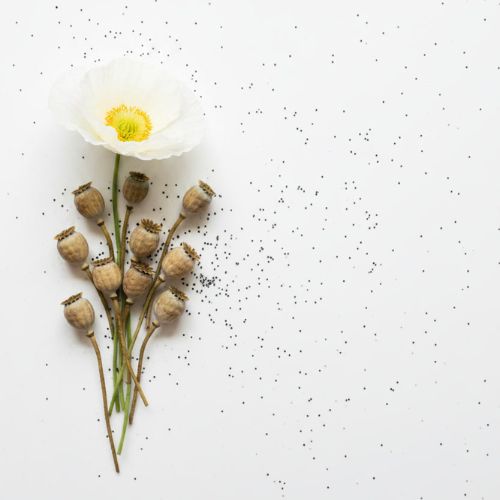
The Visual Presence: Papery white petals cradling a warm, golden centre, standing alongside structural, ribbed seed capsules that mature into papery vessels holding thousands of tiny dark seeds ready to scatter.
The Behaviour in the Field
The White poppy understands the art of brevity. Each flower opens fully only once, its petals unfurling in the warmth of a clear day before releasing by evening or the next dawn. It does not linger; it does not repeat the same bloom twice. This is not restraint born of hesitation, but of intentionality—a flower that gives everything in its single day and trusts the gesture is enough.
Watching a meadow of White poppies over a season is a lesson in succession; while individual blooms are fleeting, the continuous emergence of new flowers creates an illusion of permanence. The real work happens in the seed pods: sturdy, patient vessels that will carry the plant’s legacy far beyond the visible season.
Cultivation & Care
The Light Required: White poppies are sun-worshippers. They require an open, unfiltered relationship with direct light for the majority of the day. Choose a space that receives full sun; they will not thrive in shade or partial conditions.
The Earth Beneath: These poppies ask for very little from the soil, thriving best in ground that others might find lean or poor. They require exceptional drainage—sandy, gravelly, or loose, well-draining earth is ideal. Refuse the temptation to over-enrich with heavy compost or fertilisers; too much nitrogen will yield lush foliage but compromise the delicate brilliance of the bloom.
The Act of Sowing: Because they establish a deep, stubborn taproot early on, these poppies resent being moved. Avoid starting them in pots; instead, sow seeds directly into the open ground where they are intended to stay. Scatter the tiny dark seeds lightly over the soil in autumn or early spring, pressing them gently into the earth so they feel the ground but are still kissed by the light they require to germinate.
Water & Restraint: While seeds need steady, gentle moisture to establish their initial roots, mature poppies demand a boundary. Once settled, they are remarkably drought-tolerant, preferring the earth to dry out completely between waterings. Water deeply but infrequently, trusting their capacity to find what they need beneath the surface.
Bringing Beauty into the Everyday
In the Garden: Sow seeds directly onto steady, well-travelled ground where you wish for a quiet, dependable flourish across the season. They require very little guidance once established; they simply need to be trusted to find their own pace.
In the Workspace: Keep a dried seed pod on your desk as a grounding anchor. Let it serve as a reminder that the most visible work—the bloom, the moment—is often the briefest part of a longer cycle. The real architecture of growth happens quietly, contained within structures we might easily overlook.